Want to listen to an audio version instead? Click above,
WHAT IS IT LIKE TO BE A NEPALI FROM NUWAKOT? A week after the catastrophic flood in Rasuwa and Nuwakot district, I sat and talked with my close Nepali friend Dhruba for a few hours. He was telling me what life had been like for him growing up as a rural Nepali from Nukawot District. What struck me was the history that resonates with many Nepalis who’ve also grown up in rural village life. The flood is but one marker in a life—and in a country—that has been shaped by one significant moment after another. Here’s how that story looks from Dhruba’s perspective.
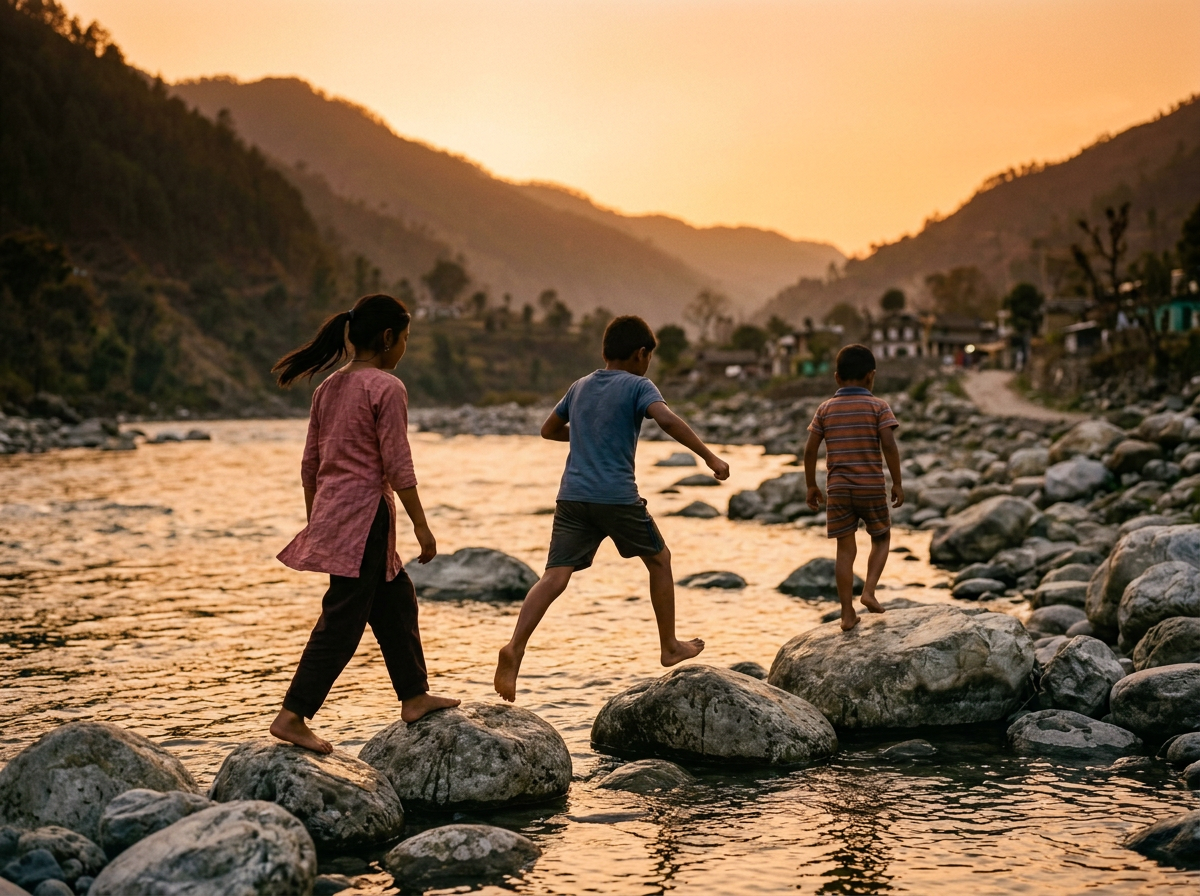
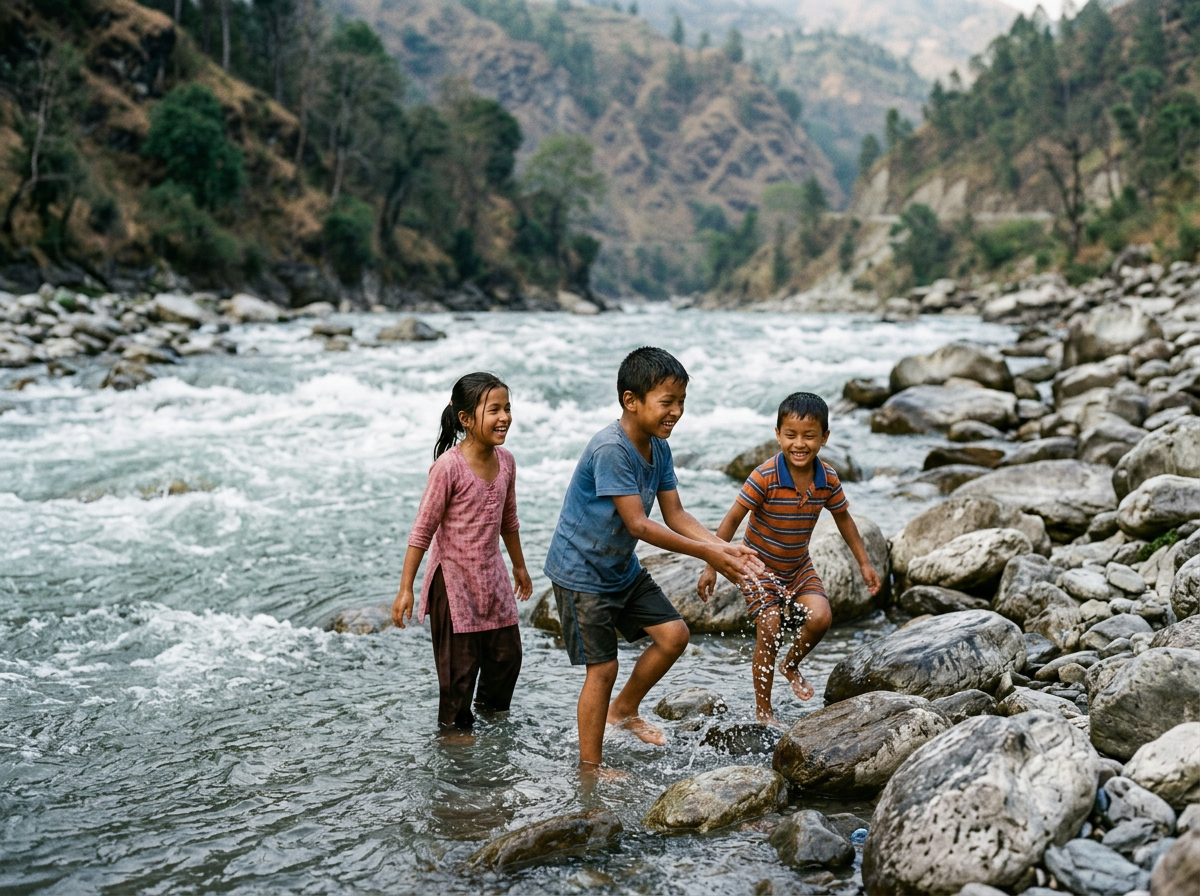
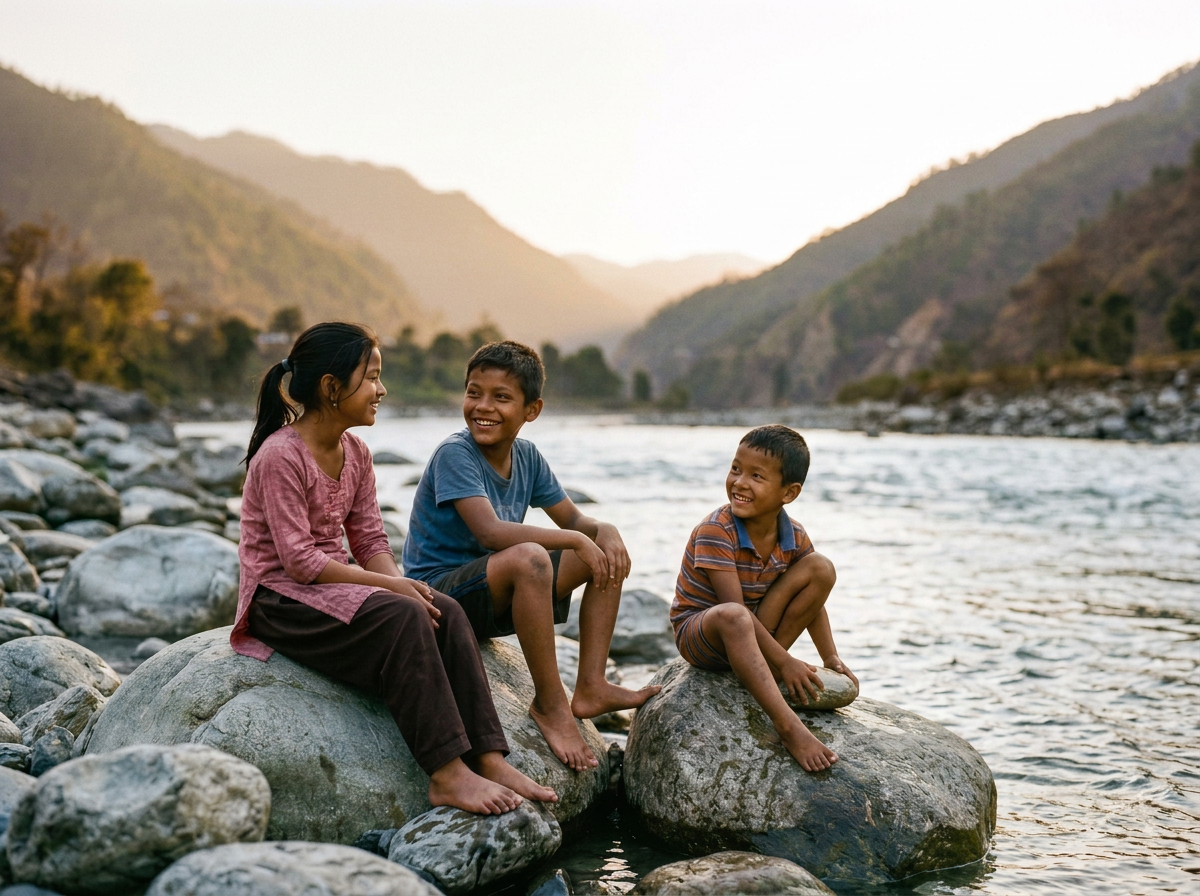
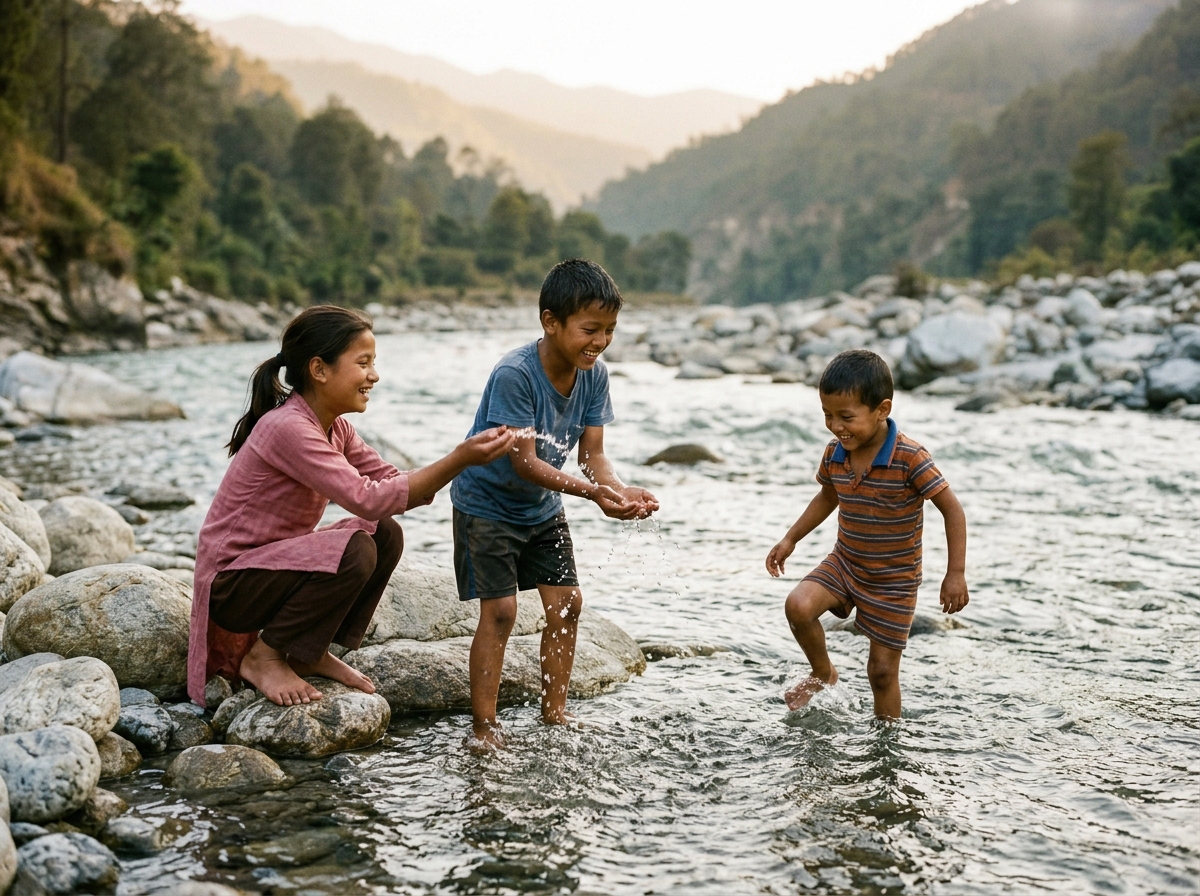
THE CHILDHOOD YEARS. Dhruba and his friends played in the wide rumbling Trishuli river quite a lot. He and his friends have seen the same river most days when they come down from the village. Where he grew up, there was no electricity—or sometimes there was only five or six hours of electricity a day. “I had no shoes at home for working in the fields with my father and mother or for going to school,” he said. “We felt like only rich kids had shoes.” Dhruba work before school and then again after school again in the fields. And I guess for me this was an interesting point. In the West, it isn’t unusual to ask someone a question like, “And what did your parents do for work.” But in rural lower Himalayan hillsides, this question may lead them to give you an odd look. That’s because nearly everyone’s parents were farmers and they worked on their own land. So do your uncles, so did your friends’ parents, so did your grandfather, so did your cousins’ parents. Dhruba and his friends walked down to school from his village in the hills of Nuwakot, and again two hours back up each day.
THE EVER CHANGING LANDSCAPE OF LIFE IN BETWEEN
Between 2001 and 2005 especially, there was the MAOIST UPRISING. There was a lot of local tension between the Royal Nepalese Army (Remember, there was a King at this time) and the Maoists (Communist Party of Nepal-Maoist) who wanted the 240 year old monarchy disposed of for a People’s Republic. During these years, clashes in Nuwakot villages became localized and vicious. A notable example occurred in October 2002, when a large group of Maoist rebels ambushed an RNA unit in Bhorlegaon village, Nuwakot, resulting in multiple casualties. Both the Royal Nepalese Army and the Maoists were known for coming into the villages to shake down locals when they believed information about the groups was being shared. Locals called this being "caught between the tiger and the gun." The Maoist Rebels were considered "The Night Government" because they typically controlled the villages by night. If they suspected a villager of being a state informant ( called mukhbir), retribution would be swift and public to deter others. Whereas The Royal Nepalese Army was "The Day Government". The military typically patrolled rural villages during the day. If they suspected that a village had fed, sheltered, or provided information to the Maoists, they would launch aggressive retaliation operations to accuse and scare the people as well. This was a lot of pressure to burden for a simple rural villager. Ultimately, the King was forced to step down in 2006 and the monarchy was formally disposed of in 2008.
Compared to my own childhood, that’s a lot of difficult memories.
Then, on Saturday April 25, 2015 at 11:56 am, a 7.8-MAGNITUDE EARTHQUAKE struck in Gorkha District, nearly connected to Nuwakot District. There was a further 7.3 magnitude aftershock that struck on 12 May. 8,962 dead country wide. All of Nepal is only a third of the size of my home state of California. 1/3 of the total population of Nepal was affected. 20,000 plus injured. 3.5 million people were instantly homeless. The hard data says 51% of the population in Nuwakot was affected. 30,000 buildings total loss and another 15,000 seriously damaged. Trishuli hydropower station in Trishuli Bazar (This is Nuwakot) was damaged. The homes and buildings were not designed for anything like this. That anything stood, was itself quite amazing even though not designed to endure such a jolt. So imagine that data being applied to the city of Los Angeles. Nuwakot District is about 90% of the size of the city of Los Angeles (not the county). True, we don’t spend our days thinking about livestock since we aren’t predominantly farmers but for these rural people, it left nearly 14,000 cattle and buffalo (used for rice planting which is someone’s income) dead.
In the aftermath of the earthquake came an untimely cruelty against the Nepali people by India’s government; the INDIA OIL BLOCKADE (2015-2016) . Remember that Nepal is a landlocked country between Tibet and India. And it is considerably easier for good to travel from India into Nepal via the flat lower Terai plains than up and over the Himalayan mountain range. The blockade was a four-and-a-half-month economic and humanitarian crisis that cut off essential fuel, medicine, and food supplies to Nepal from September 2015 to February 2016. That started just five months after the earthquake. They hadn’t even got their equilibrium back from the earthquake.
You see in September 2015 the Nepali government was working towards a new constitution. Nepal relied entirely on India for its petroleum imports. Nepal accused India of imposing an unofficial trade blockade to pressure Kathmandu into amending the constitution. This “gas” was both fuel and gas cylinders (liquid petroleum gas) used every day by millions for cooking. Nuwakot was already one of the hardest hit districts. This halted rebuilding efforts. Humanitarian organizations still doing recovery work in the district saw their supply trucks stranded and blocked from entry at the India border checkpoints. Local public schools and transportation networks shut down for weeks at a time because school buses lacked fuel, disrupting the education of children who were already traumatized by the earthquake.
COVID. (2020-2022) . After the earthquake, Nepal launched a massive “Visit Nepal 2020” campaign to boost its recovery. Tourism is a critical pillar of Nepal's economy. The government officially cancelled and suspended the campaign as the global COVID-19 pandemic escalated and international travel halted. That revenue supported 1.16 million jobs in Nepal at the time. Cumulatively, Nepal recorded over 1 million confirmed cases and more than 12,030 deaths. Tourism collapsed. Mental health crisis’s and suicide spiked at alarming rates. Nuwakot accounted for 53% of all cases in Nepal. In Nuwakot, strict stay at home orders were placed during spikes. Residents were barred (and policed) from walking outside. Local authorities banned all public and private vehicles. Only ambulances and vehicles carrying essential goods were granted road passes.
NEPAL GEN-Z UPRISING (SEPTEMBER 2025).75 dead. over 2,000 injured. What started as an innocent youth rally turned deadly when police opened fire in the crowds. My photographer friend said, “We were there taking pictures and then I saw my friend covered in blood”. It started to sprout on September 4, 2025, after the government banned 26 social media platforms. The Nepali youth felt this was a direct attack from the government, aimed at silencing their online dissent of the government. On September 08, 2025 thousand gathered in Kathmandu to rally. At 12:37 pm, the first shot was fired into the crowd. This little country again, became the center of the world for a moment.
THE NEPAL / TIBET FLASH FLOOD AND MUDSLIDE - 8:37 AM, AUGUST 26, 2026
I wanted to look back on an important point. During the EARTH QUAKE REBUILDING, Nepal wisely pushed for much stricter building codes and safer, earthquake-resilient construction techniques to replace unreinforced masonry (primarily brick construction) that collapsed during the quake. These were old homes that were destroyed along the Trishuli river in the earthquake and were rebuilt with the new building standards including reinforced concrete. Many families took large loans and invested their life’s savings to rebuild homes and businesses. They were not designed for a mud and debris filled flash flood moving at 40 to 100 miles per hour; nothing is.
The Nepal flood hit at 8:37 AM, AUGUST 26, 2026.
22,000 children are believed to be affected plus 65,000 adults. At the time this was written, 1,342 dead. 4,900 missing. This is inside the Nepal borders only. No warning for most. Moments for others, which still wasn’t enough to escape the sheer speed and immensity of it all. In an instant, homes, businesses, power, roads, bridges, other infrastructure, schools, crops and hydropower plants were wiped out. The volume of displaced dirt and debris is 130 million cubic meters. This would fill the Great Pyramid of Giza 50 times. And Nuwakot suffered a higher human impact than both Rasuwa and Gorkha Districts.
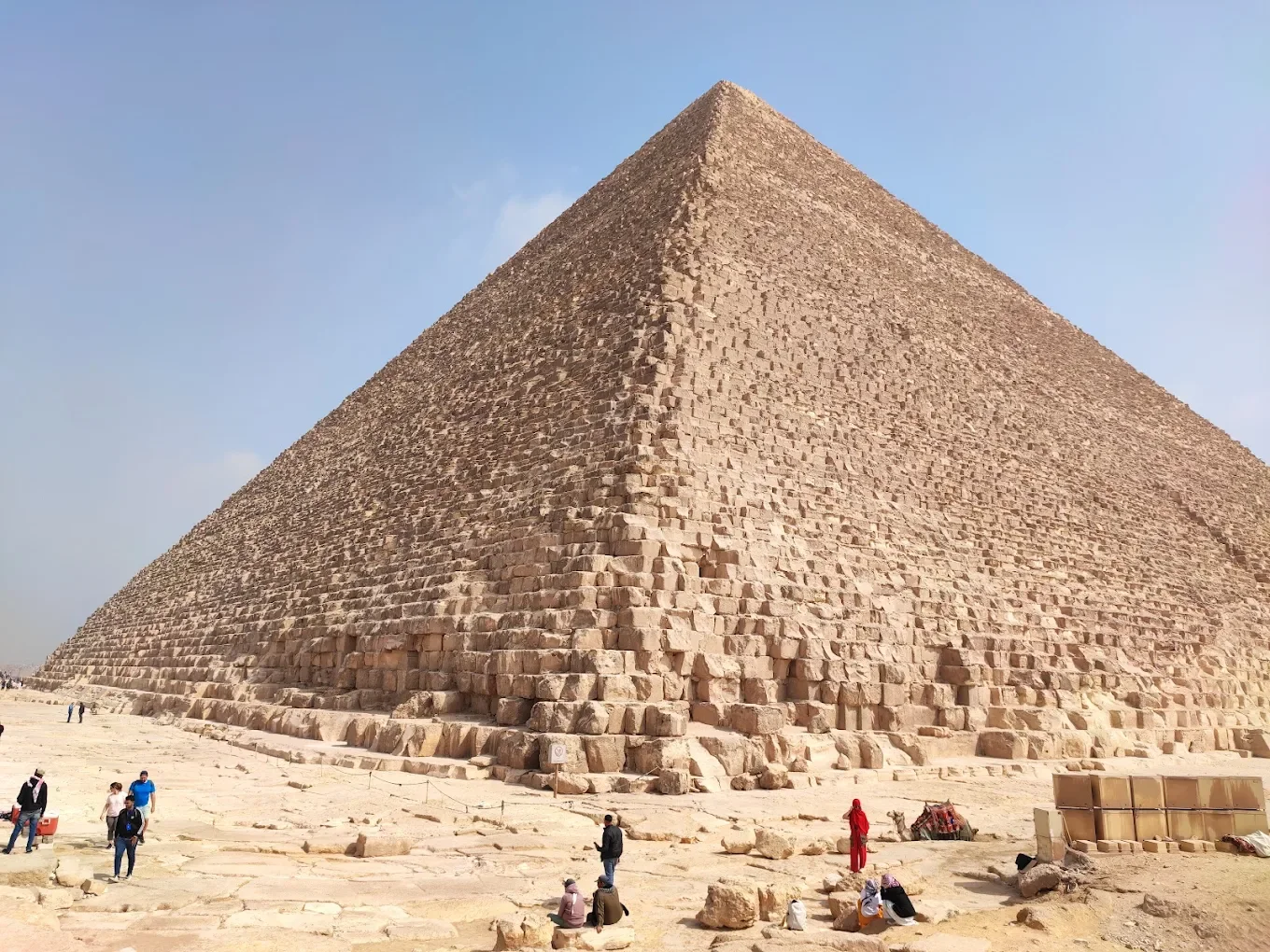
Photo credit to Marcell Babóczky. The Great Pyramid of Giza in Egypt. They estimate this took 20 years to construct. The Nepal flood debris is estimated at 22.5 times this.
THE WAY IS FORWARD
There isn’t a way back for Nepal through all of this; there is only forward. Dhruba knows this. His wife knows this. The people of Nuwakot District and all of Nepal knows this.
The landscape has changed in every way. The river, the boundaries, the surrounding land, the roads, the bridges, and the property have all been altered—and, most importantly, lives have been forever changed, yet again.
But the Nepali people have always found a way forward. They stay close to one another and, in their soft-spoken way, yet with fierce determination, they rebuild. They adapt. They find their way through an entirely new landscape of challenges, just as they have done so many times before.
Nepalis mourn for Nepal and for their people. Nepalis love Nepal—and they should. It is beautiful, and it will always be beautiful.
But for me, the spirit of the Nepali people is more beautiful than the landscape will ever be. - Mark Avery